
Having a freestanding bathtub will change the entire layout, appearance and function of your bathroom, but there are practical details you need to think about.
The size, placement, plumbing, floor support, material and every day use can all affect whether a freestanding bathtub is going to be suitable for your bathroom space.
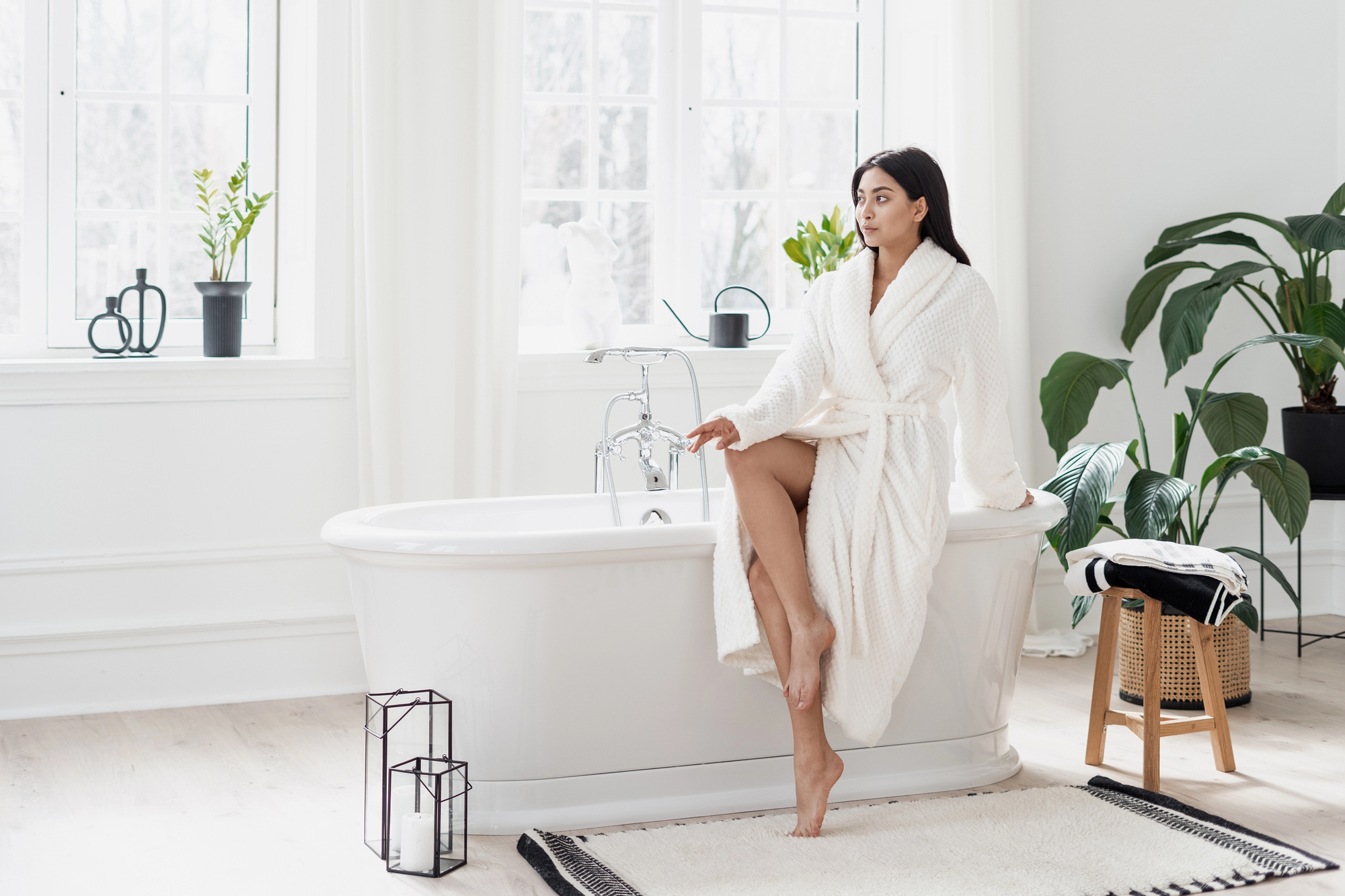
Benefits Of A Freestanding Bathtub
Unlike a built-in bath, a freestanding bathtub doesn’t need to be fitted against a wall, which will give you more freedom with your bathroom layout and the overall look of the entire room.
You can make it a beautiful focal point, especially in a larger bathroom, where you have space to show off its space and style.
There are many different designs available for freestanding bathtubs, from modern and minimal to traditional and elegant, so you’ll be able to find the design that will work for your home.
Freestanding tubs offer a more relaxing bathing experience, as they tend to be deeper and more comfortable than a conventional bathtub.
They also give your bathroom a more premium feel, making the bathroom more appealing to future buyers should you wish to sell your home in the future.
How Much Space Do You Need For A Freestanding Bathtub
Start with the tub’s footprint, and then add on at least four to six inches of clearance on all sides, to allow for cleaning and for airflow.
You also need to make sure you have a comfortable walkway with at least 24 to 30 inches of open floor space on the entry side of the bathtub.
Make sure you check the installation requirements for the model you want, like the floor load, levelness and access for the drain and overflow.
The design styles also matter, as slipper and oval tubs often need more surrounding clearance than a Japanese compact bathtub.
Ensure you leave access to the valves and that you enough room to reach behind the tub, for easy maintenance.
How Comfortable Are Freestanding Bathtubs To Use
Comfort starts with having an ergonomic design. Look for a bathtub with a gently slopes back, lumbar support and also a rim height you can lean on without straining.
Check what the water depth levels will be too, as deeper isn’t always better if the overflow sits low, or the tub is far too long for you to be able to brace your feet.
Materials also affect your comfort levels. Acrylic will stay warmer, cast iron feels solid but it cools faster, and a stone resin freestanding bathtub finish will give you a smooth and heat-retentive soak.
Having a level, well-supported base will prevent rocking of the bathtub, and it’ll help the drain line-up, so you’re not fighting leaks or dealing with awkward positioning.
You need to have a regular maintenance schedule to keep your freestanding bathtub looking and performing its best. Always wipe clean after every use, and keep the finish clean, so the bath’s surface stays smooth against your skin.
