
When you’re looking in the mirror every day, you might not notice subtle changes to your hair, and your hairline. Sometimes, when you look at yourself in a photo, you might notice changes to your hairline.
Hair loss tends to start at the temples, or along your parting, and won’t be too obvious day to day. Hair loss is inevitable, but what does a receding hairline look for a woman?!
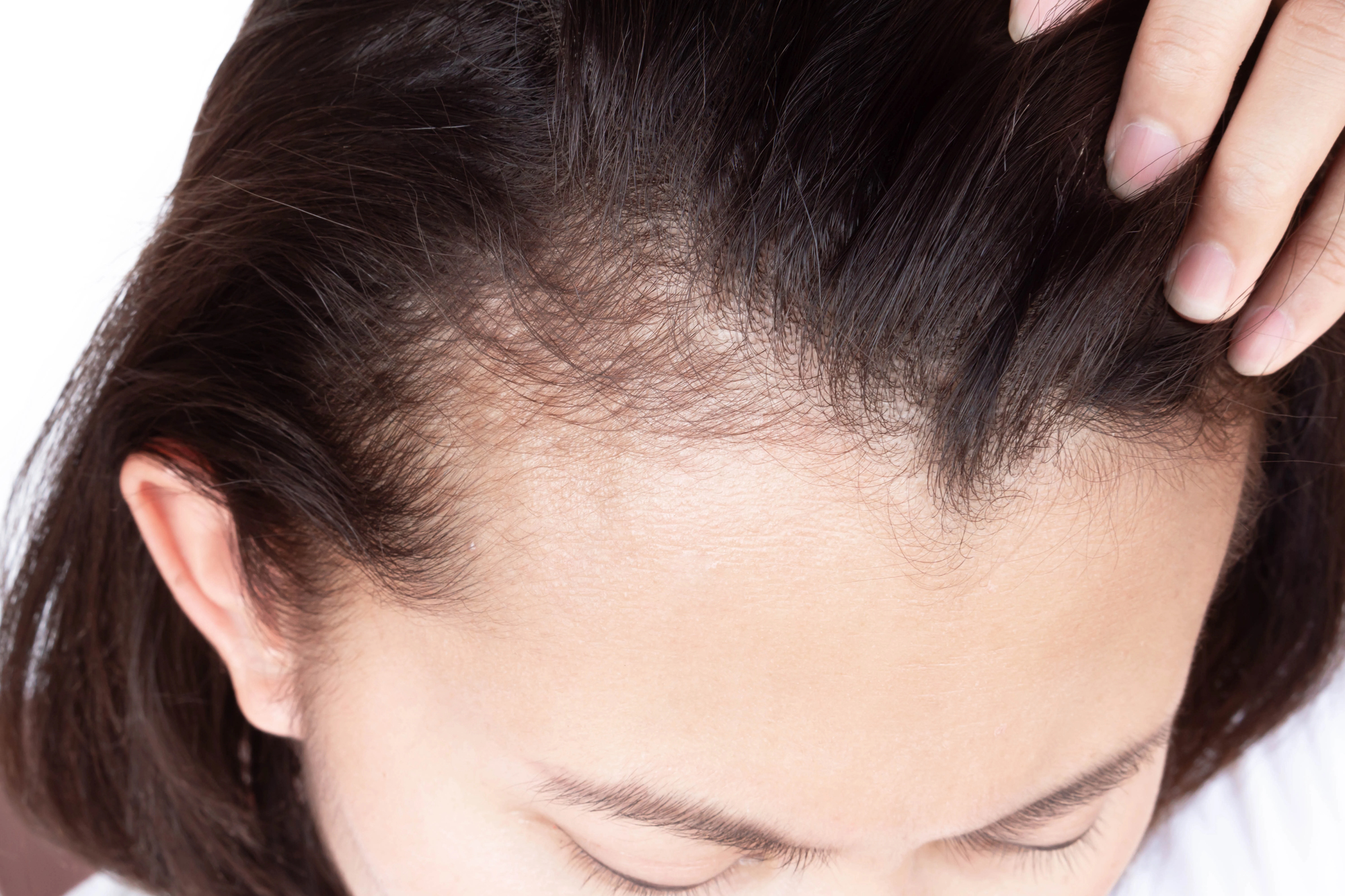
Why Do Hairlines Change Over Time For Women?
As a woman, your hairline shifts over time, due to hormones, genetics and lifestyle factors, which change how your follicles grow and shed hair.
Causes of hairline changes usually start from within your body, like hormonal changes during puberty, pregnancy, postpartum recovery, perimenopause, or menopause, all can shorten your hair growth cycles, and increase hair shedding along your hairline.
Aging plays a role too. As you get older, your individual hairs grow through finer, and the hair density around your temples gradually drop, even without obvious bald spots. Genetics also matter, if your close relatives experienced thinning near their hairline, you’re also more likely to see similar changes.
Daily habits have an effect on your hairline. Tight hairstyles (like tight ponytails or buns), heat styling (with hot irons or blow driers) and harsh chemicals will all weaken your hair’s fragile strands. The stress impact can push your hair follicles into a “resting” phase, so shedding spikes months later, and the hairline looks subtly less full.
Most Common Receding Hairline Patterns In Women
As your hair follicles thin or shed unevenly, your hairline doesn’t usually recede in a noticeable, straight line.
One common look is temple recession, where your corners lift into a softer “M” shape, often tied to your genetics’ influence.
Another look is “diffuse frontal edging”, when the very front band looks sparser, and you’ll notice more scalp between hairs, often tied to hormonal changes, or thyroid shifts.
You might notice a widening along your center parting, which creeps forwards, to make your midline hairline seem set back.
A rarer hair loss pattern you might experience, is patchy breakage along the edges of your hairline, and this is what I’m dealing with personally right now. The edges of my hair look frayed, rather than looking smooth, and it’s usually caused by styling choices, like tight ponytails, extensions, or repeated heat.
My personal hair loss issues are definitely down to my hairstyle choice. I like to wear my super long hair in a messy bun or tight ponytail, and it has given me traction alopecia issues.
All of these female hairline receding patterns often show up gradually, and are often spotted first, by looking at photographs of yourself.
How A Receding Hairline Differs From General Thinning
When your hair is beginning to recede, you might notice fewer short and wispy baby hairs, or slower hair growth along the perimeter of your hairline, while the rest of your hair can seem fairly normal.
With diffuse hair thinning, the hairline can remain unchanged, but each hair strand may “miniaturize”, change in texture, and make your scalp show through in bright lights.
Your hormonal changes often influence your hair patterns, but traction alopecia, from tight hair styles targets your hair’s edges first.
How To Check Your Hairline Without Obsessing Over It
Anxiety can make you overcheck your hair, and miss real patterns. Instead, focus on lifestyle factors you *can* control, like gentler styling, using less heat, balance protein and iron (in your diet), stress and sleep.
If you do have steady temple recession or widening over 3-6 months, you can always visit a dermatologist to discuss receding hair in women, and rule out traction, hormones or deficiencies issues.
