
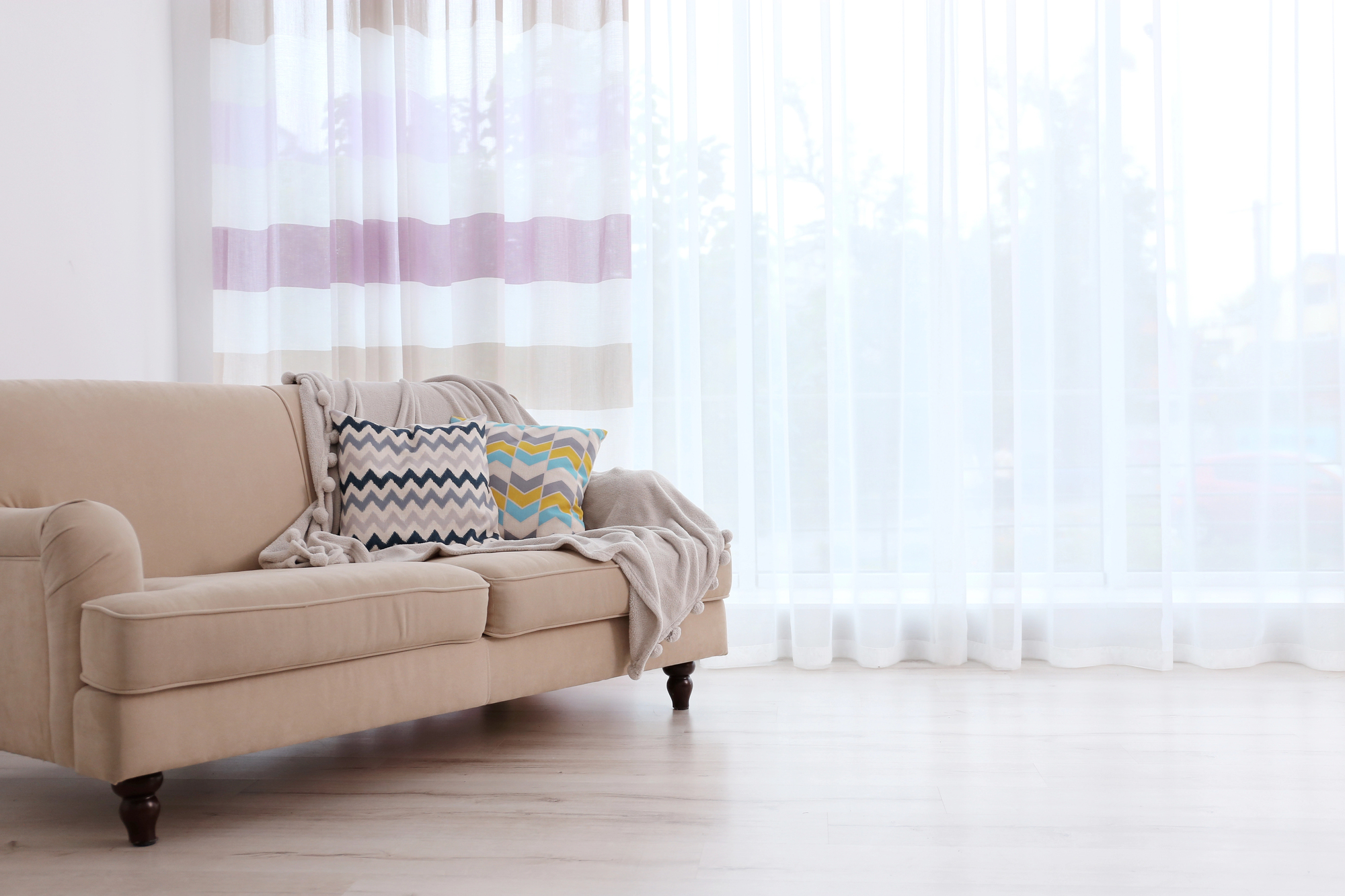
Curtains do a lot more than just frame your windows. They influence the light texture, proportion and overall mood of a room, which is why they’re an important aspect of your interior design. You want your curtains to complement your decor, whilst also giving you privacy and warmth.
Matching Curtains To Your Overall Style
Start by clarifying what your decor aesthetic is – modern, traditional, eclectic or minimalist, and let that guide your color coordination with your walls, furniture and flooring, aiming for harmony rather than perfect matches.
You can use pattern mixing to add some interest, like pairing a bold curtains print with simpler upholstery, or invert that balance, if your furniture already stands out.
Try and keep any themes consistent, by repeating shapes, colors or motifs from any artwork, rugs or accessories, so the curtains complement the decor.
With the seasons, you might rotate richer tones and heavier looking designs during the cooler months, and switch them for lighter, fresher looks in the warmer months, making sure you’re getting privacy and light control with your curtains choices.
Choosing The Right Fabric For The Room
The style of your curtains will set the mood of the room, but the fabric of your curtains will affect how the curtains look, how they hang, how they filter light, how they insulate and how they’ll wear over time.
You first need to decide between sheer materials and heavy materials. Sheer curtains suit a room where you want gentle light filtration and a more airy feel, whilst heavier curtains give you more privacy, heat insulation and a more formal look.
The texture of your curtains are the next important factor, as linen blends add a relaxed depth, velvet will feel luxe and absorb sound, whilst crisp cottons stay versatile and structured.
The color of your curtains is very important, as light colored fabrics will bounce daylight, whilst darker tones can ground a space and give the room more drama.
Getting The Length And Fullness Right
The size of your curtains determines if they’re going to look custom, when hung, or look awkward.
Start by measuring the width of your window as well as the height, and then add extra width (usually 1.5 to 2 times the window size) for proper fullness. Doing this will prevent your curtains from looking skimpy when closed, and will improve the light control.
Mount your curtain rods 4 to 6 inches above your window frame, to make your ceilings feel higher, extending them 3 to 6 inches past each side, so the panels stack neatly off the glass.
Use color coordination to balance the visual weight of long panels, darker/bolder colors feel heavier so precise length will matter more. Although, floor-grazing curtains do collect more dust, and will need more frequent cleaning.
Layering Curtains For A Softer Finish
If you layer your curtains, it’ll help to soften hard window lines and give your room a finished look. Start with a solid and heavier panel to give you privacy and light control, then add sheer overlays that will filter the daylight and create some depth.
Focus on your color coordination first, letting one layer echo your wall color, then introduce a slightly deeper or lighter shade in the second layer.
The layering will affect your upkeep, so make sure you choose machine-washable sheers and easy-clean fabrics for the main panels.
Hang layers slightly off the floor in higher-traffic rooms, to reduce the dust build-up, and rotate the panels occasionally, so the sunlight doesn’t fade one side of the curtain more than the other.
